By Nick Carter, Marketing and Communications Volunteer
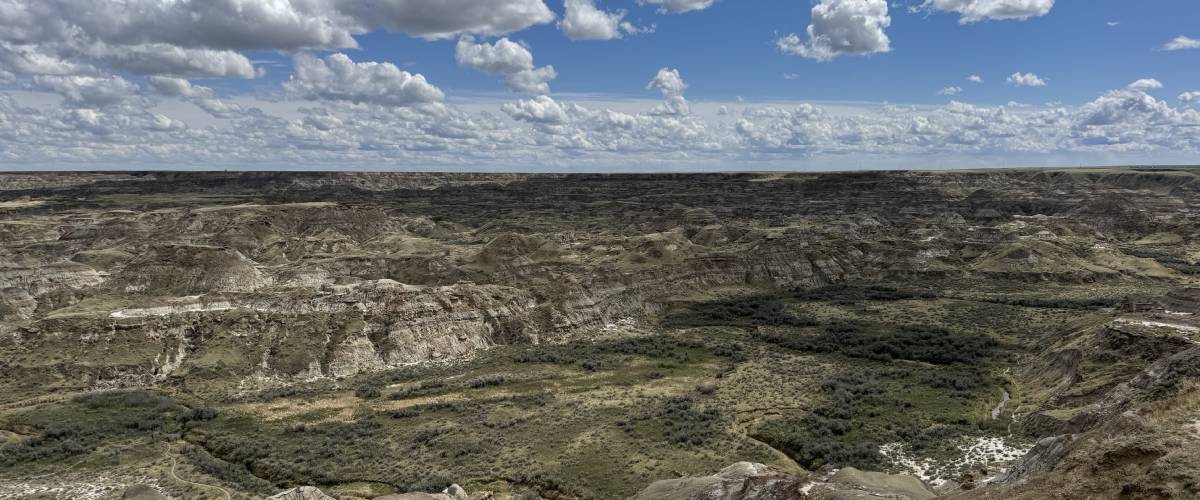
Alberta has a variety of iconic landscapes: the Rocky Mountains and foothills, the sprawling boreal forest, the open grasslands, and of course the dry, rocky badlands. At first it might seem like the badlands are a desolate and lifeless place, with only the fossilized bones of prehistoric creatures eroding from the rocks as a sign of living things ever existing in this place, but the badlands of Alberta are as interesting as they are full of life.
To start with a more technical definition, badlands are areas where extensive erosion has exposed outcroppings of bedrock that was deposited layer upon layer millions of years ago. They occur in areas that have typically been eroded by ice, water, wind, or other forces over time, and where the ongoing effects of erosion result in odd landscape formations like heavily-rilled valley walls, buttes, and hoodoos.
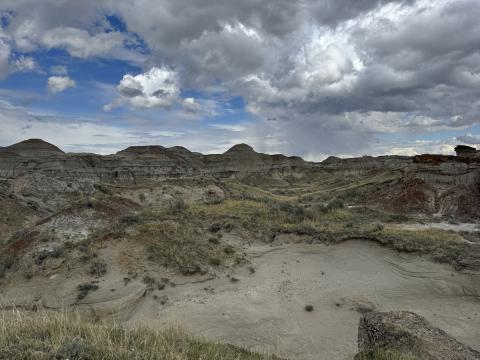
Badlands can be found in many different parts of Alberta. Some of our southernmost badlands are just north of the Canada-USA border in the Milk River Valley seen at places like Writing-on-Stone Provincial Park, which are also some of our oldest badlands. Far to the northwest is Kleskun Hill Provincial Park east of Grande Prairie, the site of Alberta’s northernmost badlands. The most famous, though, would undoubtedly be the badlands along the Red Deer River at places like Dry Island Buffalo Jump Provincial Park, the Drumheller area, and Dinosaur Provincial Park.
Most of Alberta’s badland landscapes, including those along the Red Deer River, originally formed about ten thousand years ago during the waning days of the last Ice Age glacial maximum. Huge amounts of accumulated water from the melting ice sheets were suddenly released as the glaciers receded, carving up the prairie landscape as it drained away, which created broad valleys and exposed the underlying bedrock. Year after year erosion continues from seasonal weather, weathering the rocky outcroppings and widening the valleys.
The rocks that make up the foundation of the badlands are sedimentary, meaning they formed from tiny mineral particles eroded from elsewhere, carried eastward by rivers, and deposited in layers in watery environments like rivers and lakes, floodplains, deltas, and coastal regions. The rocks of the Alberta badlands range from about 84.1 to 65 million years old, spanning the later part of the Cretaceous period, although other outcroppings in other places we wouldn’t really call ‘badlands’ may be either older or younger. The badlands rock exposures are mostly sandstone, mudstone, and shale. By studying these rocks and the fossils within them geologists have learned that, during the late Cretaceous, much of eastern and central Alberta was a flat, swampy lowland between the rising Rocky Mountains to the west and a great inland sea called the Western Interior Seaway along what’s now our eastern border. At certain times this seaway would expand westward, covering much of the province under its waves for millions of years.
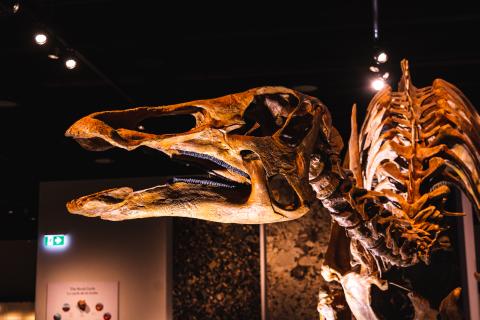
All sorts of creatures lived in this prehistoric environment, and the Alberta badlands are legendary for their abundant fossilized remains. This includes plenty of dinosaurs, of course, with names that fill books and museum halls around the world, including RAM’s Natural History Hall, such as Albertosaurus, Edmontosaurus, and Dromaeosaurus. Palaeontologists also find fossils of mammals, marine reptiles, crocodiles, turtles, ammonites, many other types of animals, and plants in the badlands. The fossils of these organisms formed when their remains wound up in water and became buried by layers of sediments which seeped into and preserved the hard parts of the body like bones, teeth, and shells, turning them into fossils.
It’s not all just prehistoric remains, though. In the southern Alberta badlands you can find all sorts of modern plants and animals that are no less fascinating than the extinct ones. Many creatures that live here specialize in rocky habitats and so are unique to these sorts of landscapes, giving them a special feel that evokes the desert country far to the southwest.
The plant life in the badlands alone is worth appreciating. In the more northerly patches, namely the Kleskun Hills and along the Red Deer River upstream from the Drumheller area many of the trees are typical species of the parkland environments, such as White Spruce and Trembling Aspen, but as you move further south other species like the great Eastern Cottonwoods seen along the river in Dinosaur Provincial Park become the more dominant trees. In spring wildflowers add some beautiful colour to the rugged landscape, and Silver Sagebrush fills the air with its lovely aromas. Look near the ground in dry, open spots and you’re sure to notice plenty of cacti as well. Not just in the southern badlands either, but way to the northwest in the Kleskun Hills too. One of the easiest species to see is the Plains Pricklypear, but there are also more uncommon and less obvious species too like the Spinystar. It’s always a good idea to be careful around cacti, as their spines are painful when lodged in the skin, and we in turn can damage them with one wrong step.
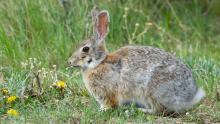
Look around the Alberta badlands and you might find the bones of American Bison, reminders of a time when millions of these animals roamed the plains. While bison might not cover the prairies anymore, the grasslands still support herds of that other characteristic prairie ungulate, the Pronghorn. Down in the badlands valleys Mountain Cottontails might be the cutest mammal residents, and crevices in the rocky outcroppings are used as shelters by bats.
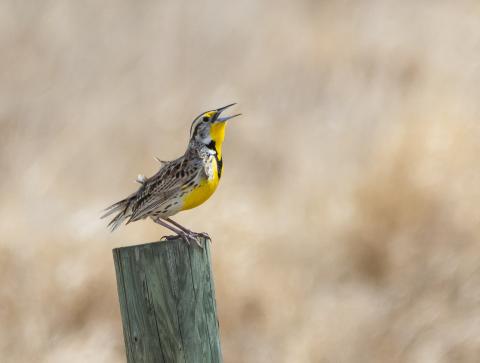
From spring to autumn the badlands are a wonderful place for birdwatching; with the relative lack of trees, you might be surprised, but it’s true. Explore the dry slopes and valley bottoms and you may see Rock Wrens, Mountain Bluebirds, and Lark Sparrows perched on stony outcroppings or hoodoos. Even large predators like Golden Eagles will nest in the quiet open spaces. And as the evening sun goes down, Common Nighthawks come out to swoop for insects. Riverside cottonwood strands are often home to Brown Thrashers, Spotted Towhees, and Western Kingbirds. Up on the surrounding prairie level, Loggerhead Shrikes and Western Meadowlarks perch on the barbed wire fencelines, white Ferruginous Hawks and Turkey Vultures soar up above.
Smaller residents of the badlands can be just as amazing to spot, such as the rare Greater Short-horned Lizard, the only lizard native to Alberta. Well, aside from snakes that is, as snakes are technically a sort of lizard themselves. The Bullsnake might look big and intimidating, but it’s nonvenomous, and of no danger to people. Other badlands critters are indeed venomous and best kept at a greater distance, such as the Prairie Rattlesnake, Northern Scorpion, and Western Black Widow. But don’t worry too much about them. Watch where you step and don’t put your hands, feet, or other body parts into any nooks and crannies. That’s all it takes.
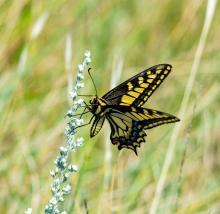
Many other small critters are safe and easy to admire up close. There are a wide variety of butterflies that inhabit these hot, open meadows, from delicate little Melissa Blues to subtle Common Wood-Nymphs, while swallowtails congregate on the valley edges. Tiger beetles scurry across the sand in pursuit of flies, grasshoppers buzz in the tall grasses, and little jumping spiders sit inconspicuously on sandstone outcroppings. And when the sun goes down all sorts of moths come out to flutter in the moonlight.
The Alberta badlands are remarkable places, and they have drawn naturalists to their wide open spaces for over a century now. Before your next summer road trip to enjoy all that the badlands have to offer, check out RAM’s Natural History Gallery to learn more about the creatures that once or still do live in these amazing landscapes, and the forces that shaped them.