Behind the Glass: Cleaning the Ant Chambers at the Royal Alberta Museum
By Camilla Leurini, Live Animals Assistant
The Bug Gallery at the Royal Alberta Museum is one of those rare places where time seems to slow down. Visitors of all ages and backgrounds wander through, leaning close to the glass, captivated by the small but mighty creatures going about their lives. You can watch paper wasps build their nests without worrying about a sting. You can observe cockroaches with the comforting knowledge that they are definitely not in your kitchen.
But one exhibit consistently draws a crowd: the ant chambers.
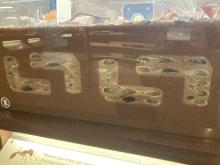
At first glance, the ants you see while camping or crossing your backyard might not seem remarkable. Yet those surface wanderers are only the tip of the iceberg. Beneath the soil lies a hidden world — the queen, the eggs, the larvae, the pupae — all part of a complex and thriving colony. Our ant exhibition gives visitors a rare opportunity to peer into that underground world.
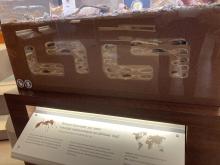
The display includes eight nest units made of aerated concrete, each with one glass-facing side that allows guests to observe the colony’s daily life. You can see ants moving larvae, collecting seeds, and maintaining their carefully organized society.
Over time, however, the ants began to redecorate.
Debris accumulated. Trash piled up. And eventually, the glass became difficult to see through. The ants were thriving — but our visitors couldn’t see them clearly anymore.
Which meant we had to clean it.
No pressure… just eight chambers full of ants.
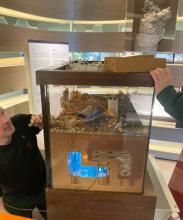
Cleaning an ant colony is not as simple as wiping down a tank. We had to avoid losing ants into the gallery, avoid stressing them to the point of harm, and ideally avoid getting bitten. Step one: accept there are no shortcuts. Step two: make a plan.
We reached out to our professional network to see if anyone had tackled a project like this before. The consensus? If you make one area more comfortable than another, ants will move on their own. Light versus darkness. Warmth versus coolness. Comfort versus discomfort. Importantly, we needed to minimize stress. Vacuuming was not an option. This would require patience.
As it turned out, none of the institutions we contacted had attempted this before. We were venturing into new territory.
Lucky us.
Before touching the exhibit, we practiced on a behind-the-scenes nest. We studied how the chambers connected, how the water lines ran, and how fragile the aerated concrete could be. Thankfully, we had spare chambers in case of cracks.
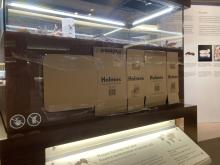
We scheduled the operation for Monday and Tuesday, when the museum was closed. The week prior, we began subtly encouraging the ants to relocate by making certain chambers less comfortable — specifically, withholding water from select units. On Monday, February 23rd, we covered the four front chambers with cardboard, blocking out the light. The strategy worked: the ants began moving into those darker spaces.
Then we closed the tube connecting the nest to the foraging area.
It was time.
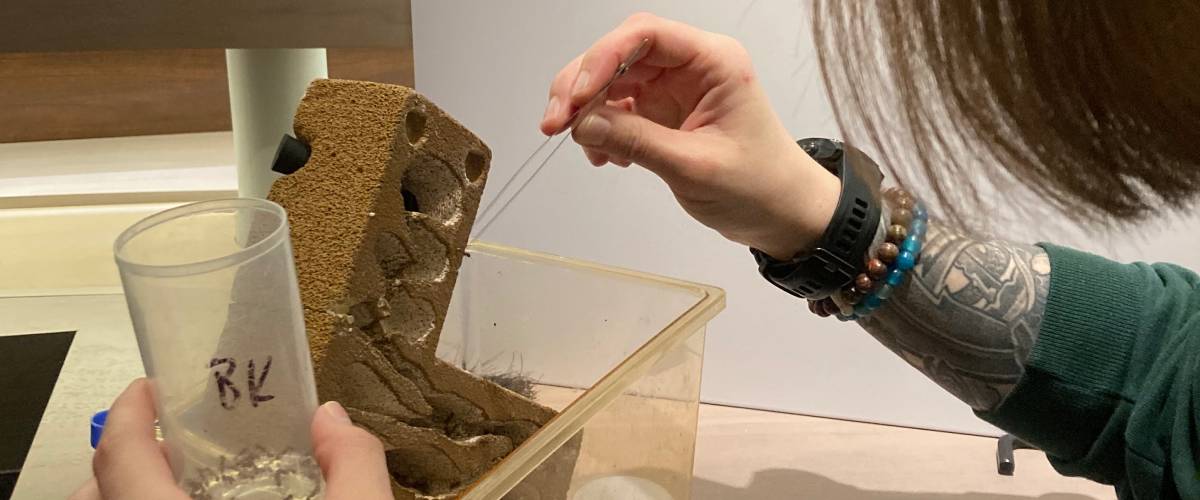
Using a rolling cart, we carefully detached the enclosure from the wall and opened the back. This was a three-person job. One team member removed the concrete block, sealed connections, and cleaned the glass. The other two gently transferred ants from the block into a vial and back into the nest. Slowly. Carefully. Methodically.
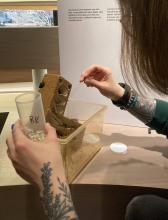
Four chambers down.
We paused for the day, then reversed our strategy — making the cleaned chambers more livable so the ants would gradually return.
Behind every exhibit window is careful planning, teamwork, and a deep respect for the living creatures in our care. Visitors may see only the seamless display, but behind the glass is a dedicated team working to ensure both animal welfare and an unforgettable guest experience.
And sometimes, that means cleaning eight ant chambers… very, very carefully.