How to Get Through the Winter - If You’re a Wild Animal
Nick Carter, Marketing and Communications Volunteer
In summertime, as they say, the living is easy. Not just for people, but wildlife as well. Summer days in Alberta are long and often warm. Winter is a different matter. As the northern hemisphere tilts away from the sun, the days become short, with indirect sunlight. Temperature averages fall below freezing, frost occurs, and the upper layers of lakes and rivers turn to ice. Precipitation falls as snow.
In addition to the cold weather and all the snow and ice it brings, animals also have to deal with the fact that many plants have either died, gone dormant, or are buried under the snow. This makes finding food more difficult for herbivores. Another major food source, insects, are also in limited supply. Staying warm takes a lot of energy, so animals need calories to make it through. Altogether this presents all sorts of challenges that the wildlife of Alberta have evolved to deal with over thousands and thousands of years. Here’s how they do it...
Sleeping Through It
Don’t you wish sometimes that you didn’t have to get out of bed on those cold, dark winter mornings? Many animals don’t bother. Instead, they find or make a sheltered place to hide and go into a period of dormancy. The most famous, of course, hibernation, which is a prolonged dormant state. During this period, which may last a few days up to several months at a time, the rates of metabolism, breathing, and heartbeat all drop, as does the body temperature. This isn’t a lazy surrender to the harsh elements, however, but a strategic survival adaptation.
Many of Alberta’s mammals are well-known hibernators, and tend to be species that heavily feed on things like fresh plant shoots, seeds, fruit, and insects. These foods aren’t in easy supply during the colder months, so hibernating mammals sleep the winter away until their resources return, often putting on as much body fat as possible during the spring and summer beforehand. This provides them with some energy to keep their biological engines running until spring. Hibernating Alberta mammals include ground squirrels, bears, and some bats. These all technically hibernate underground, but our resident bats seem to travel some distance out to the Rockies to seek shelter in caves and crevices, while bears and ground squirrels use dens and burrows respectively.
Some small mammals and birds that are active year-round will enter short-term dormancy called torpor. The body temperature drops a few degrees and the metabolism slows down, but they can wake up quicker than hibernating animals. In this way animals can get through relatively short periods of extra-bad weather when food can’t be acquired.
Other animals go into long periods of dormancy, but under different names. Invertebrates go into diapause, a period in which the lifecycle and associated processes go on pause. This usually happens in covered places like under fallen leaves, inside the wood of trees, or in burrows. Some invertebrates seem to view buildings as worthy places to take shelter for the winter, and become surprise roommates to us. The life stage in which invertebrates go into diapause varies by species. In insects for example, different species go dormant as eggs, larvae, pupae, or adults.
In ectothermic, or “cold-blooded” vertebrates that can’t generate their own body heat, winter dormancy is called brumation. In Alberta this means our frogs, toads, salamanders, snakes, and our one species of lizard. Brumation is different from hibernation in that energy for the season is mostly stored in the body as glycogen instead of fat, and reptiles may need to wake up for an occasional drink. Wood frogs brumate under soil and leaf litter where they can tolerate their body tissues freezing thanks to some cool internal chemistry. Tiger salamanders burrow deep into the soil. Garter snakes are renowned for gathering in great numbers to brumate together in holes known as hibernacula.
On mild winter days, some hibernating animals like butterflies and bears will wake up and go for a wander. Coming across either out in the woods during winter can certainly be a surprise.
Moving Around
Some animals opt to leave for places where enough food and more agreeable conditions can be found. This adaptive seasonal movement is a behaviour called migration. Birds, thanks to their ability to fly, are probably the most famous migrants, and some species undertake major seasonal journeys. Most of Alberta’s bird species migrate south for the winter. Some, such as boreal songbirds like warblers and vireos, make long trips down to the sunny climates of Central and South America. Others take short-distance trips, such as Trumpeter Swans that fly down to the American Rockies.
Many of our migratory birds feed on things like insects or aquatic plants, so to get enough to eat they go to where their needed resources can be found. Despite the hazards associated with long-distance travel, migration has been shown to be highly beneficial to the species that undertake it. Migration isn’t compulsory, though, and some birds that we think ‘should’ migrate don’t always bother to make the trip. Rivers, lake lagoons, and cooling ponds warmed by power and water treatment plants can remain unfrozen all winter, and waterfowl often spend the winter in such places, sometimes in large numbers. This saves them a trip and may give them a head start when the spring rush northwards begins again, as long as they can make it through.
As wild as it may seem, some birds migrate into Alberta to spend the winter. These are generally species of the far-northern boreal forest or arctic tundra. Nomadic mobs of boreal birds like Pine Grosbeaks, White-winged Crossbills, and Bohemian Waxwings descend on city parks and acreages to feed on seeds and berries, only to wander off again as quickly as they appeared. Little arctic songbirds like Redpolls and Snow Buntings are popular winter visitors to open rural fields and roadsides, as are ghostly northern predators like Snowy Owls and Gyrfalcons.
In addition to short-distance travel to hibernacula, a few bat species migrate out of the province for the winter. Some larger mammals undertake seasonal movements between different habitats as well. Mountain species like bighorn sheep and mountain goats descend to lower areas in the winter, and mountain caribou move to overwinter in old-growth foothills forests. Bison would historically wander great distances during the winter as well, carving and maintaining paths across the plains that other species like pronghorn and deer would make use of. Despite this ability to migrate short distances, these larger mammals still have to deal with some tough conditions.
Toughing It Out
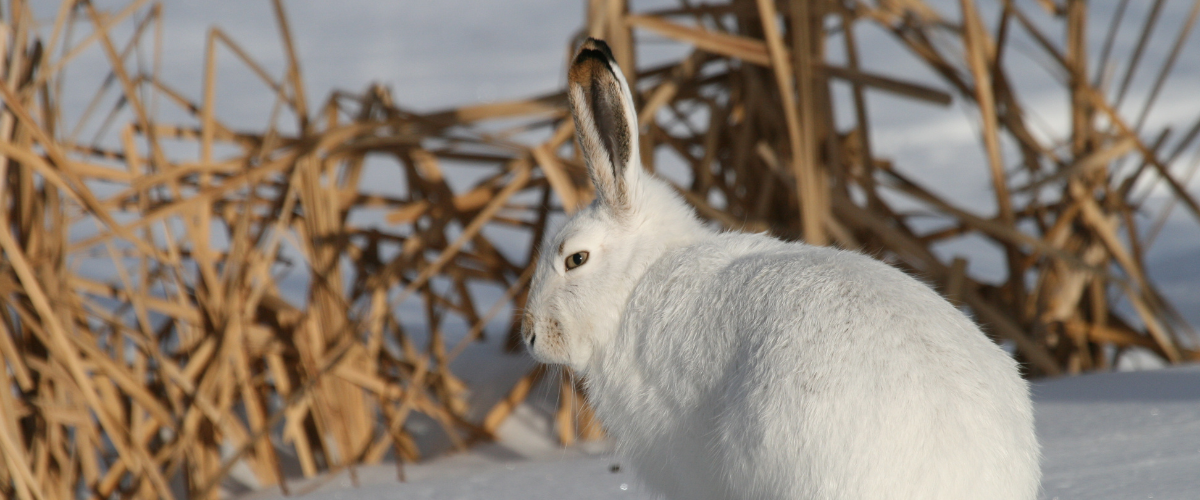
Animals that can’t hibernate or migrate long distances to warmer areas have to find ways to deal with winter as it comes. Seed-eating animals can gather and stash food during plentiful times for harder days ahead. American red squirrels build a larder of spruce cones known as a midden, which can be easily found in just about any forested area. Birds like chickadees and nuthatches hide seeds in the crevices of tree bark. Woodpeckers tap out holes in trees in search of dormant insects in the bark. Most birds of prey migrate south, leaving voles and mice to the owls that stick around. Many kind-hearted people worry about small mammals and birds that are out and about all winter long, but don’t worry too much, as these animals are well-adapted to the lives they lead. Their hot-burning metabolisms generate a lot of heat. In mammals this heat is trapped in the body thanks to insulating fur. Birds use their feathers, which are even better for insulation. You may see birds looking extra ‘puffed up’ during the winter. This isn’t because they’ve gained weight- they fluff up their feathers to trap more heat.
Beavers make a winter store of tree branches just outside their lodge which they eat the bark from when not taking things easy in the shelters they build for themselves. Sometimes they’re joined in there by muskrats. Our other large rodent, the porcupine, gnaws soft tree bark and nips the buds off twigs for food.
Small mammals like voles are active in the insulated space between the snow and ground known to scientists as the subnivean zone. Here they go about their business, sometimes popping up through tunnels in the snow to move around, but may become food for predators like foxes, coyotes, and owls. Many predatory animals, especially smaller species like badgers and mink, are awake but take life pretty slow during the winter. Larger carnivores like wolves need more food, and have to risk the time and energy needed to tackle large prey to get it.
For large herbivores like deer, pronghorn, and bison, winter can be a hard time. They need to eat a lot during the summer in order to pack on fat reserves, since their winter diet is low in nutrition. Moose nip off twigs and stems of young trees and shrubs, caribou get by on lichens, while elk and bighorn sheep paw the snow away to get to the desiccated plants below. Bison sweep away the snow with their shaggy heads to eat the grass underneath. These champions of winter survival take advantage of their heavily-furred front ends by grouping together and turning into blizzards that sweep across the plains when other animals seek out shelter. Deer don’t do as well on dead winter forage, and if they can’t find decently nutritious plant matter they end up going hungry. The nutrition gained from plants in winter is barely enough for most large herbivores, and it only deteriorates during this time, so those fat reserves they put on are often crucial for survival. By spring many hoofed mammals are looking lean and ragged but may have many more weeks ahead to push through. Starving individuals make easy meals for predators.
What You Can Do
If you want to make life a little easier for wildlife in winter, one great thing to do is give them space. Animals need to spend a lot more time finding and eating food during the winter just to get by. They also need time to rest, digest, and conserve energy. When we get too close or act in ways that disrupt their behaviour, this can add extra stress to an animal’s day and make it less likely that they’ll pull through till mid spring. It’s good to watch and appreciate wildlife from a distance, and if we let them go about their business in peace, then we can all have a more enjoyable winter.